1937 212 overheating

I just bought a 1937 Super Terraplane two door sedan. It’s a 29,00- mile car which has been well cared for.
It runs well but it is overheating. I took it about 3 miles on the highway at 60 after putting around so I thought it might’ve been the highway speeds. I have taken it on a couple of drives since at 30 +-miles an hour stopping for lights and traffic signs and it’s overheating in those conditions as well. I don’t know precisely how hot, but hot enough for it to be bubbling, but not crazy steam. Yes I’ve been careful, just testing to check conditions.
i’ve checked the belt tension and the coolant is a translucent green, which doesn’t appear to have rust in it. I checked the spark plugs and they’re running a good temperature color. I have not checking the timing yet. The hose is not collapsing.
Wondering if there are Goto things to look for with these engines, as I am new to flathead I6’s. Thank you in advance
Comments
-
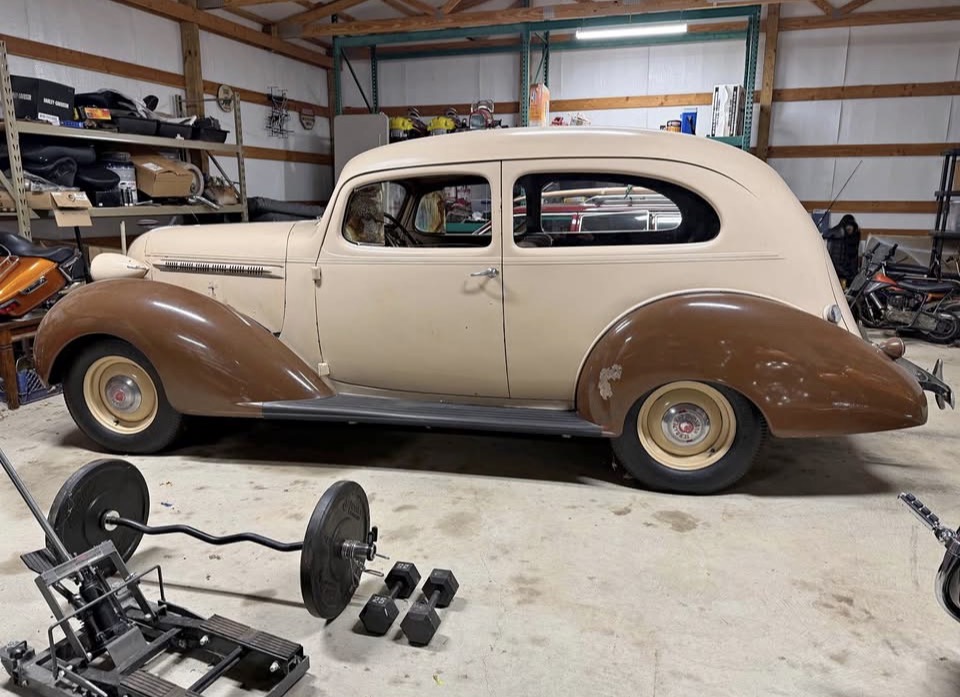
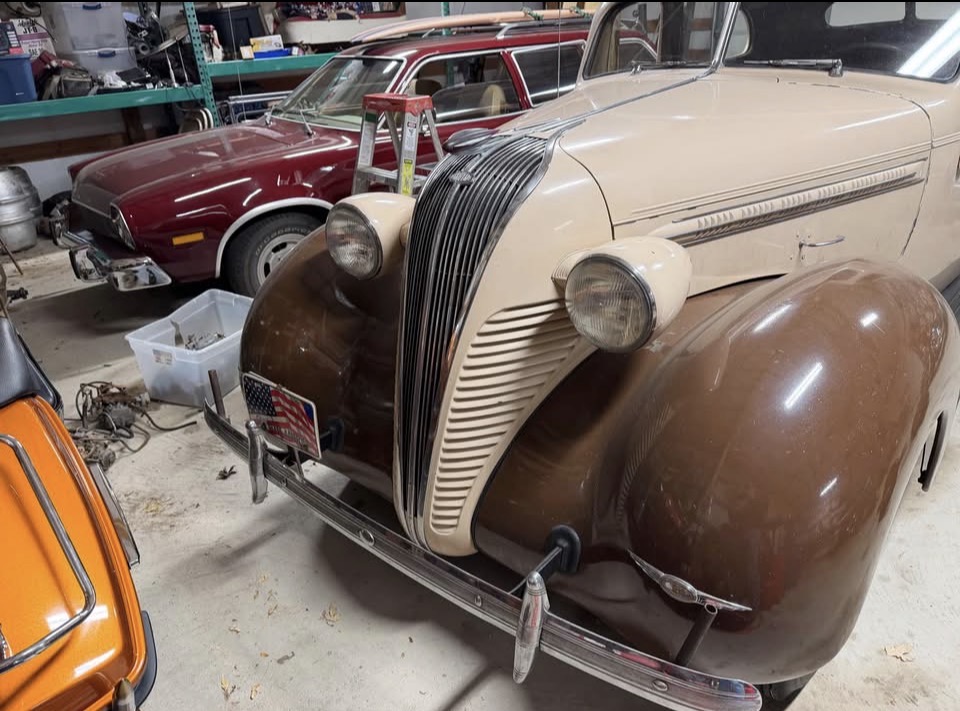
Well bummer, it won’t let me add photos of the engine and radiator which we’re taking with the same camera. Go figure.
0 -
It is common for the water jacket on the driver side of the engine to be rusted out internally, and not controlling the water flow properly.
0 -
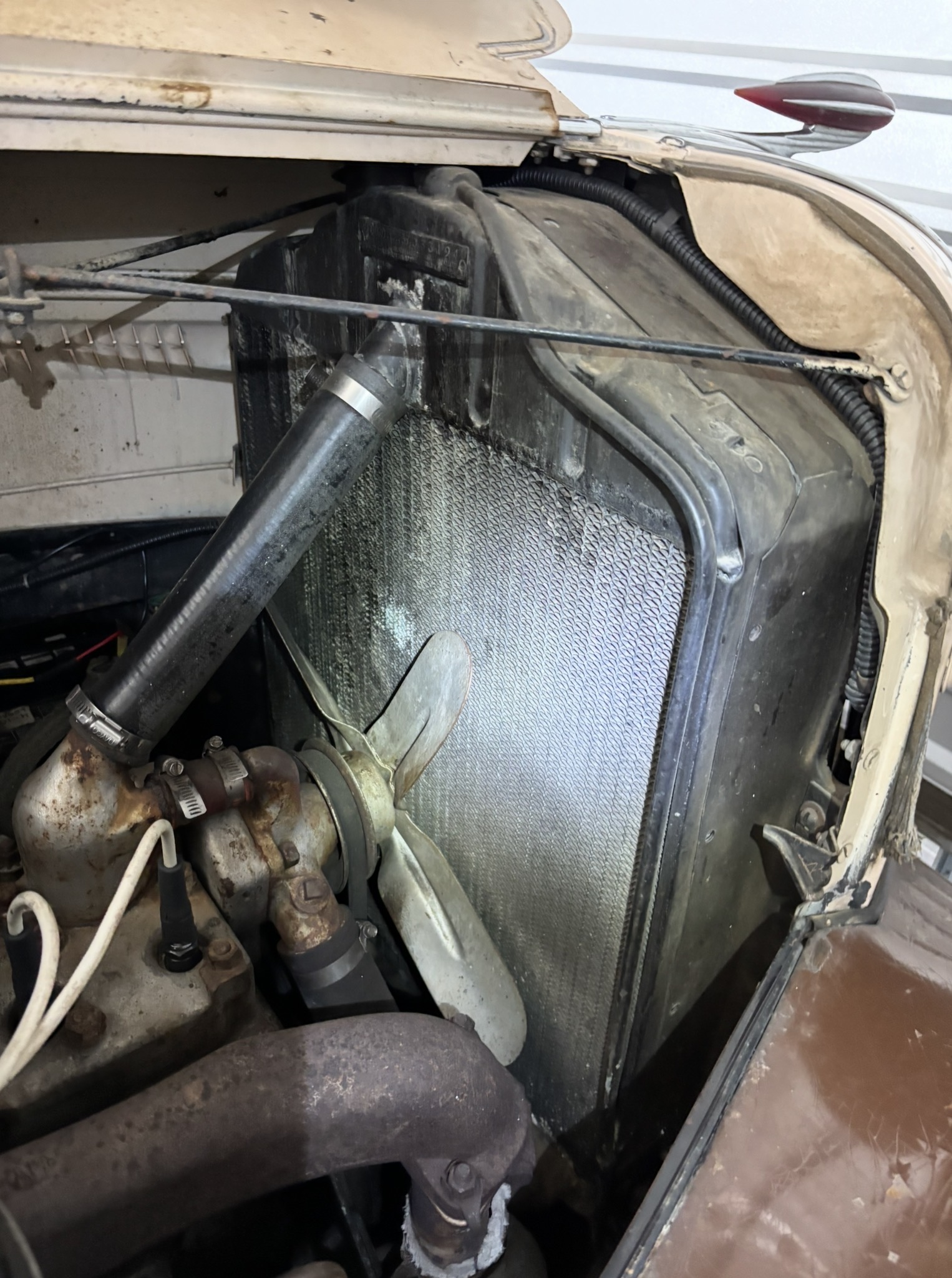
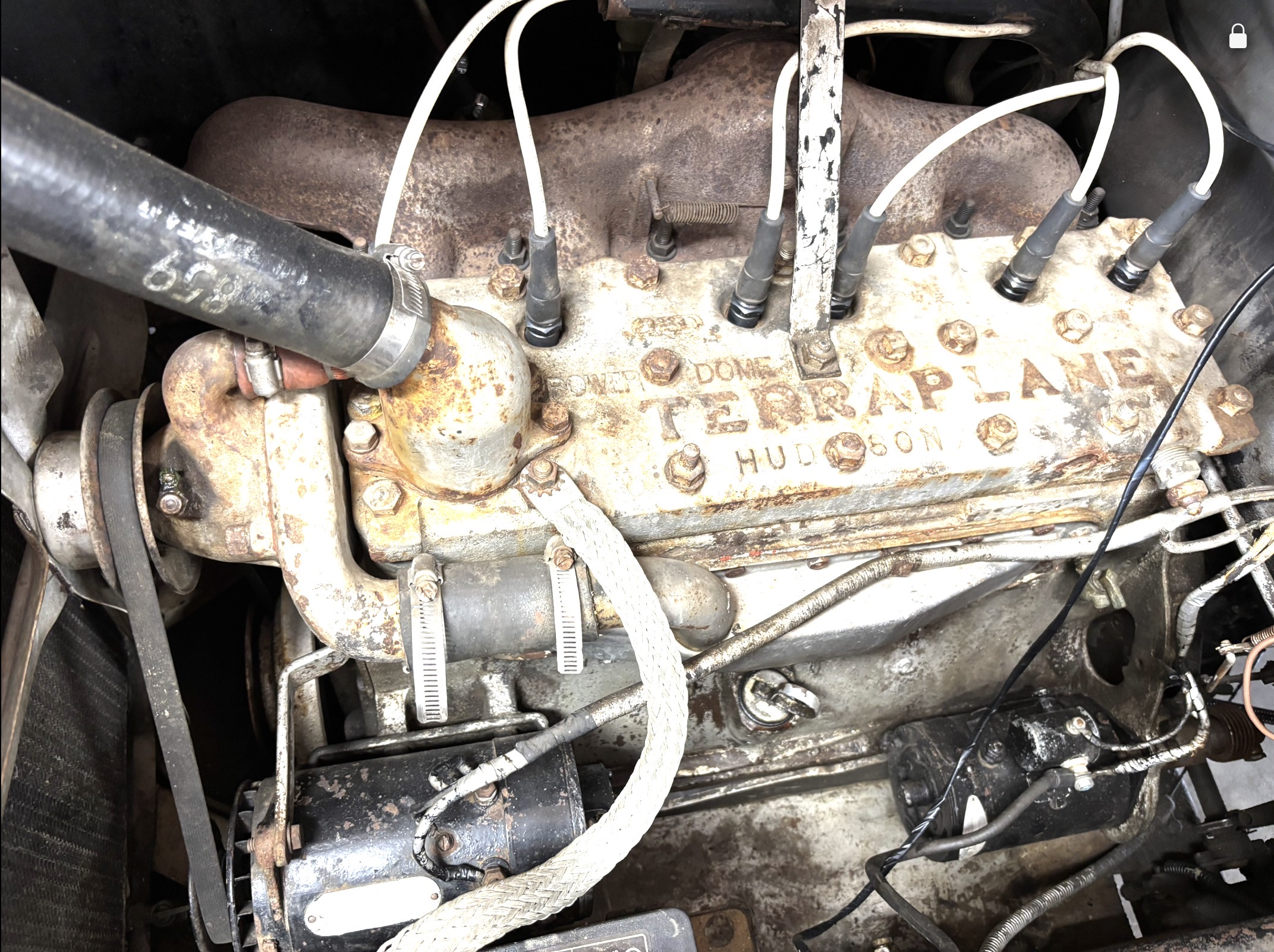
Outsmarted my iPhone by doing a screen grab of my existing photo
0 -
Thank you. I should probably disassemble the jacket and pump to inspect those components before I pull the radiator and have it rodded out.
0 -
While you have the water jacket off, look around the edge of the cylinders and see if there are pile of rust. There probably are. This should all be poked loose with a screwdriver and then shop vac' ed out.
0 -
Here are a couple more possibilities:
1). The sender (in the block) might be "lying" to you, indicating a much higher water temperature than is actually the case. If so, you need to know how accurate the sender is. Remove the sender from the block. The wire from the dash gauge should remain attached to the sender, and you will also need to ground the body of the sender to a ground somewhere on the car. Heat some water in a pan, along with a thermometer to measure the water's temperature. Heat the water to a known temperature, and then immerse the sensor rod) in the heated water. Turn on the car's ignition and observe the needle the dashboard temp gauge. (Obviously, the car should be parked near your pan of heated water, for this test to work!) The normal water temp operating range is 195°F – 220°F. So, when the water in the pan reaches about 220 degrees, the dash gauge should be reading somewhere in the mid-range. If not, replace with NOS (if you can find one for a '37 Terraplane, ha-ha!).
2). The thermostat in your engine may not be fully opening, thus constricting the flow of water. Prepare a test pan with water and thermometer, as above. (You won't need electrical hookup for this test). Remove thermostat from engine and immerse it in a pan of heated water. Observe the movement of the thermostat. At what temperature does the thermostat open, and does it open fully? How smooth is the action? The old style brass thermostats are still around for purchase, if you need one.
0 -
Thank you for your response Jon. I will perform these tests. When driving the car, it never got above halfway on the gauge so I will determine if that sensor is reading correctly. I suspect I could use a new gasket for the radiator cap as well to make sure it’s building adequate pressure.
Even though the car only has 29,000 miles on it, I know rust never sleeps (To quote Neil Young), so I’ll check passages as well.
Thank you
0 -
Can you actually rod out a honeycomb radiator ? Are the ‘37’s a closed cooling system? If not, there is no pressure to build, a new gasket would only stop coolant from sloshing out.
all the previous posts are probably the best info. I particularly like the one about ensuring the temp being seen is accurate. An infrared thermometer is pretty inexpensive.
Are your brakes dragging? How old are your distributor springs. Too much advance will give you a warmer engine.
regards, Tom
0 -
All good advice above. I myself would start by pulling the bottom hose off and stick a garden hose in neck. Water should flow out as fast as it goes in.
0 -
Many thanks fellas! It would make sense that you can’t rod out a honeycomb radiator. I did not realize these have that configuration. To my knowledge, the brakes are not dragging. I will order new points/distributor cap and points to be safe as I don’t know their age and will check the timing. When I get the time outside of my busy work schedule, I will perform these measures and report back. Thank you for taking the time to help me out.
0 -
Have you considered sending it to Advance Distributors? They do all that, plus bushings, springs and cam and reset the advance curve. Currently less than 10 day turn.
regards, Tom
0 -
Did you ever get around to checking the water jacket and pump?
0 -
Update, I spent some time with her Saturday morning. There was more play in the fan belt than I had originally assessed so I adjusted the generator and got some good leverage on it. My gal hadn’t seen the car yet and I wanted to pick her up from the airport in it.
I took it for a couple test drives and it did fine so I drove to the airport (a 20 minute drive, at times on the highway at 50 mph) and parked. She never overheated. We putted around town all day and she did fine.
I’ll continue to keep an eye on it but that must have been it. Thank you for all the help and guidance.
0 -
There should be an inch of belt movement between the pump and generator pulleys. I cannot imagine how loose your belt would have had to have been for that to be your issue. but i have only been a licensed mechanic for over 50 years now. Too high a belt tension will be self correcting when your pump bearings (and perhaps generator bearings) give out.
regards, Tom
0


Categories
- 37.1K All Categories
- 121 Hudson 1916 - 1929
- 21 Upcoming Events
- 106 Essex Super 6
- 28.7K HUDSON
- 601 "How To" - Skills, mechanical and other wise
- 995 Street Rods
- 151 American Motors
- 185 The Flathead Forum
- 49 Manuals, etc,.
- 79 Hudson 8
- 45 FORUM - Instructions and Tips on using the forum
- 2.9K CLASSIFIEDS
- 614 Vehicles
- 2.2K Parts & Pieces
- 78 Literature & Memorabilia
- Hudson 1916 - 1929 Yahoo Groups Archived Photos